

Irreversibly lost
Breadcrumbs and democracy

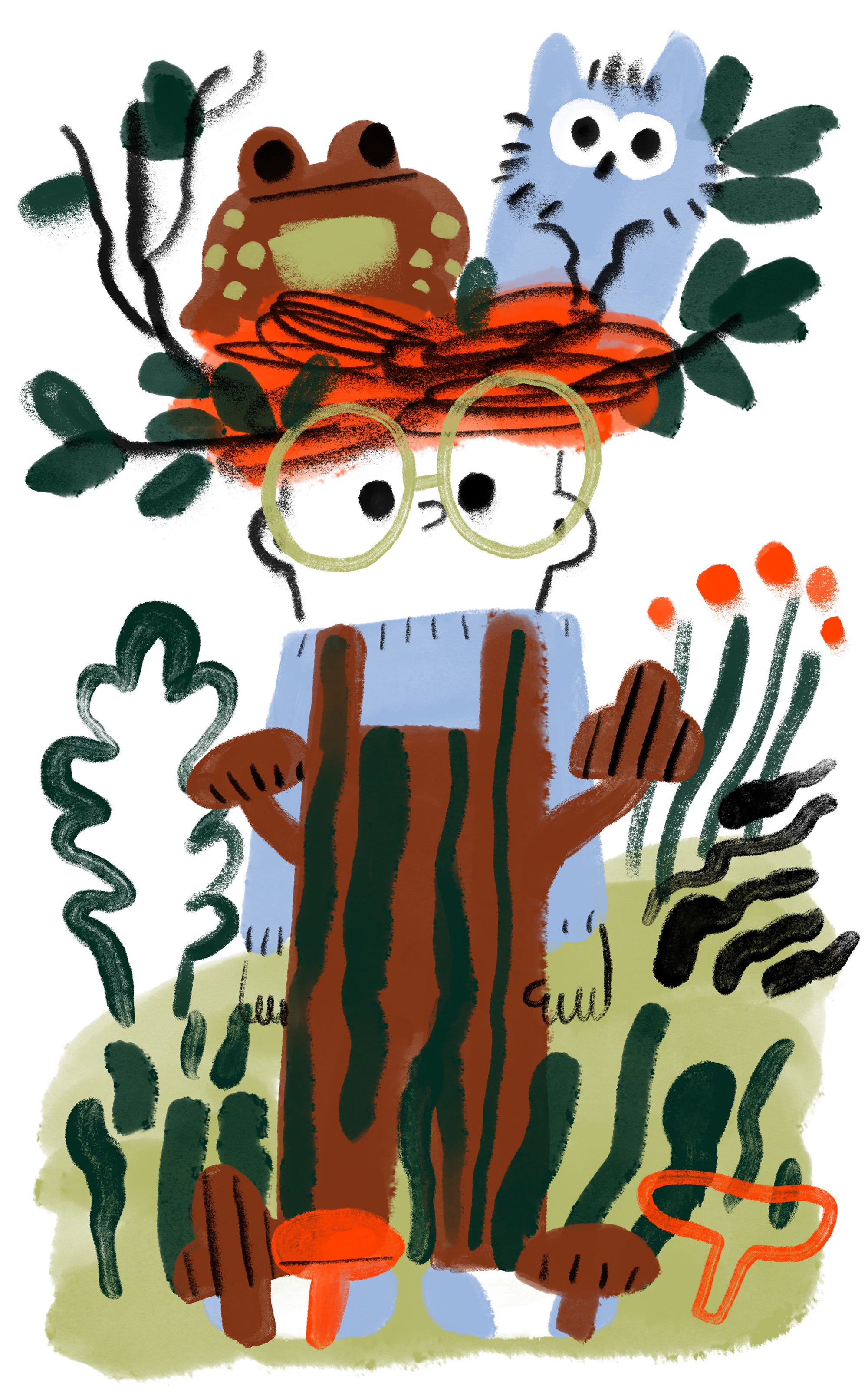
(English translation below)
Para no extraviarse cuando lo abandonaran en lo profundo del bosque, pensó en marcar el camino dejando caer piedrecitas o migas de pan. Pero al rebuscar solo encontró sobrecitos de azúcar.
Si tienes uno en la mano, me temo que el niño se ha vuelto a perder, irremediablemente.
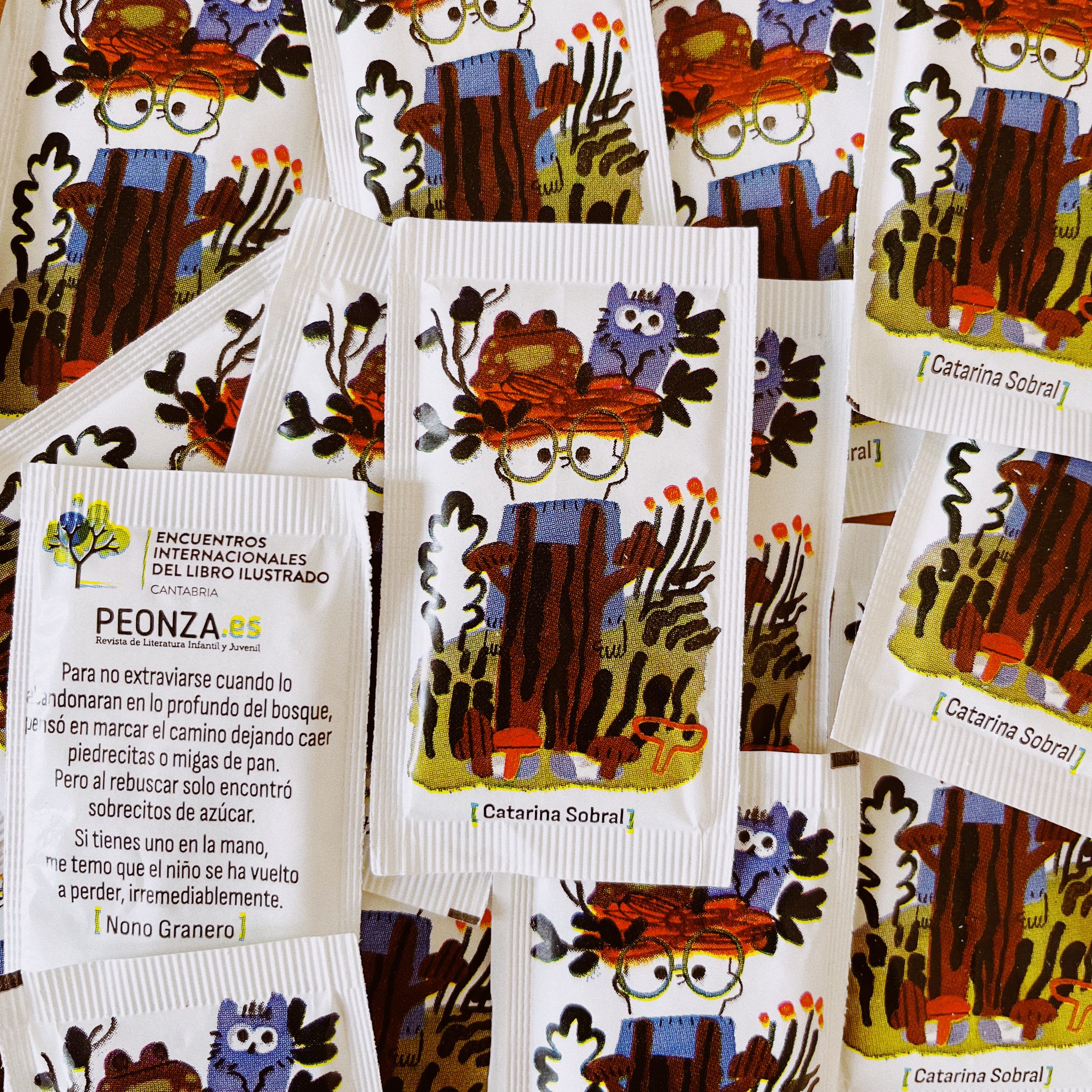
So as not to get lost when they abandoned him deep in the forest, he thought of marking the path by dropping small stones or breadcrumbs. But when he searched, he only found sugar packets.
If you have one in your hand, I’m afraid the boy has gotten lost again, irreversibly.

The text above was written by Nono Granero, the funniest and fastest-talking Andalusian I know, and also a writer and illustrator of picture books. We were both invited, along with many other children’s book authors, to collaborate with Peonza, a Spanish kidlit magazine, on a series of sugar packets under the theme ‘The Forest’. I was over the moon when they paired me with Nono, and even more so when I read this brilliant piece of flash fiction. It’s a very difficult thing to do, much like writing picture books: telling a good story in such a concise and clear way (and, even more so, one with such illustrative potential, as witty and tragicomic as this).
I’ve already shared here a flash fiction I wrote a while back, and today I’m going to share another one (also an old piece, based on real events, but reordered chronologically):
Island
I fell again.
I scraped my arm, near the elbow, in the shape of an island, the kind that looks like it might have buried treasure. I hadn’t hurt myself like this since first grade, when I fell in the playground playing hopscotch… or elastics… I think it was hopscotch, and skinned the palms of both hands. The right one was worse, so I started writing and brushing my teeth with my left hand. I got the whole worksheet for the number 2 wrong. I drew it backwards, the entire page.
Today my tap dance teacher told me I’ve been falling a lot, that I should work on my balance. And I used to think falling was a good sign, that it meant I threw myself into things, that I wasn’t afraid. Now that thought lingers, while I brush my teeth (with my left hand), or when I accidentally lean on my elbow: I lack balance.
When the island has formed a scab, I’ll mark an X.
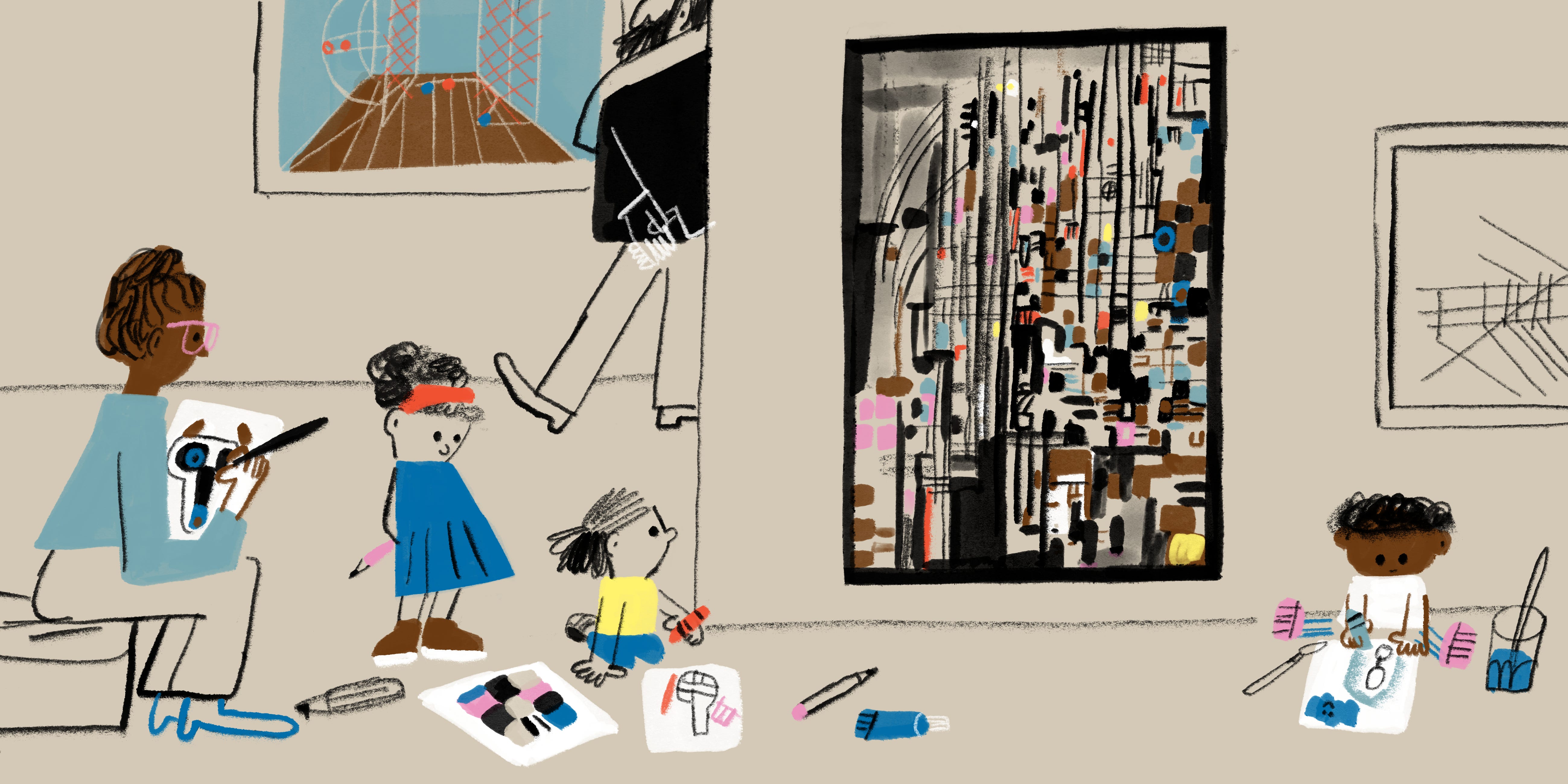
Back to my recent (illustrated) work, I’ve finished the biography of Vieira da Silva…
… started working on my next book…
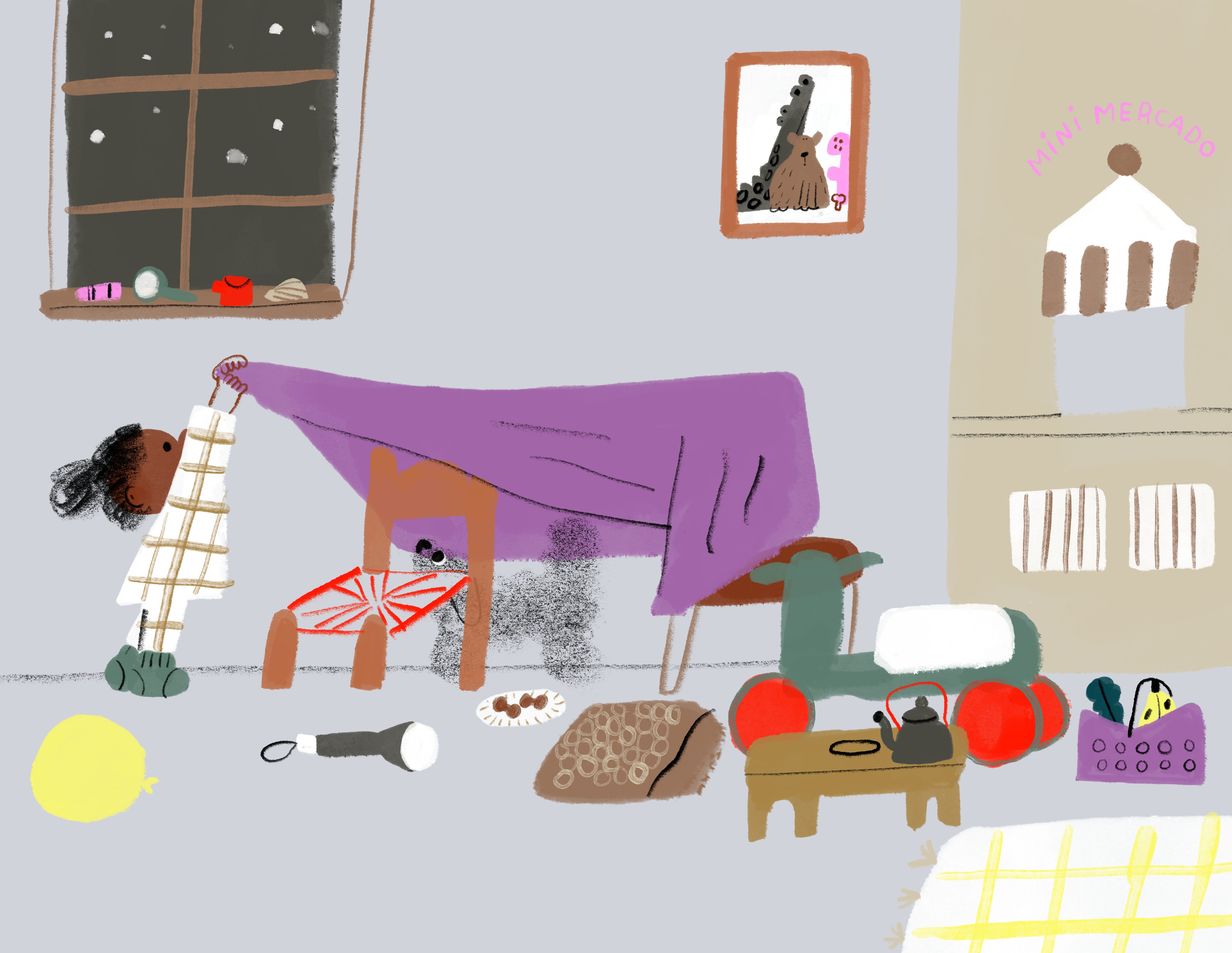
… illustrated an invitation postcard for a party…
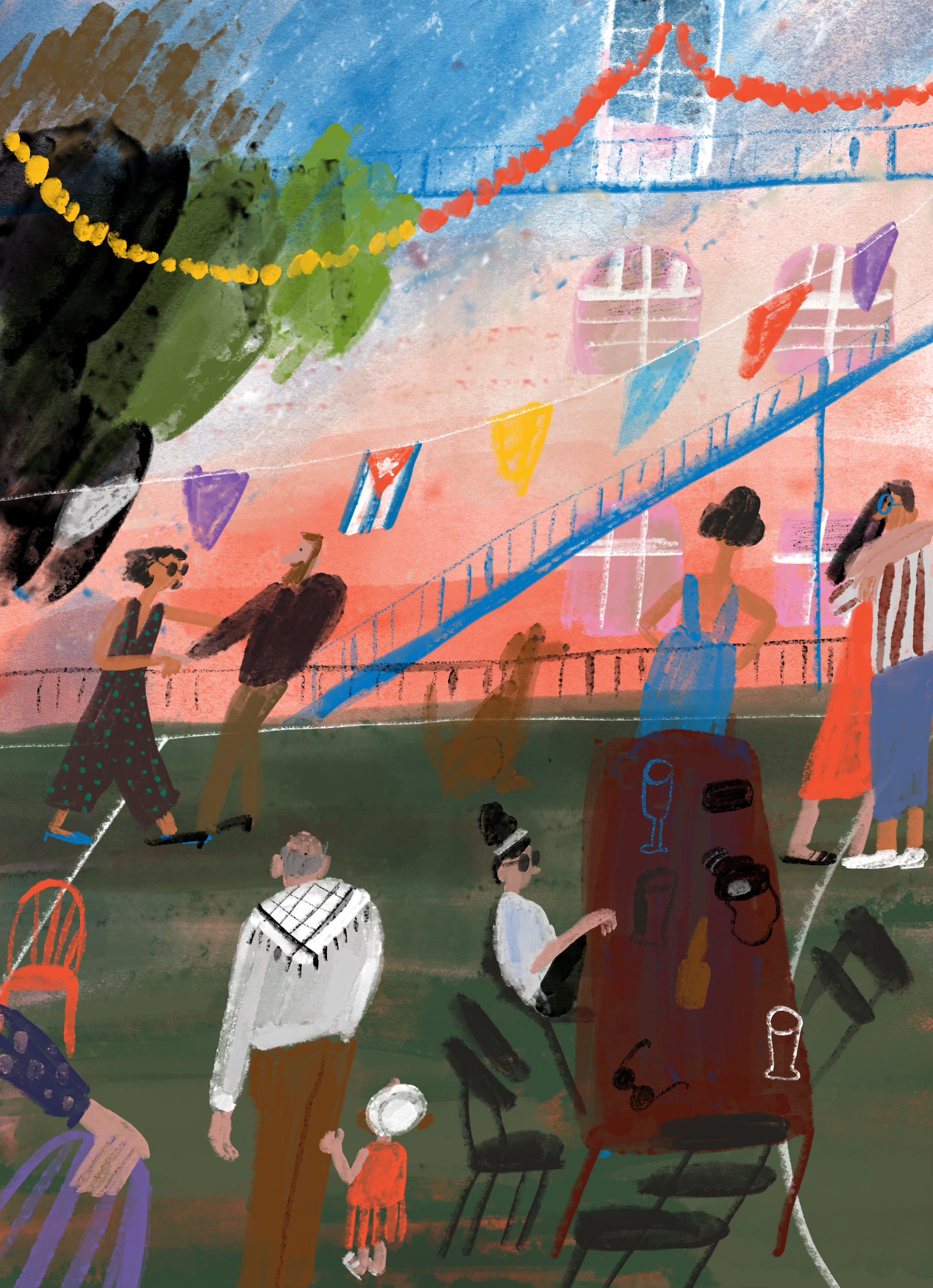
… and illustrated a couple of columns for the magazine Oeiras em Revista.
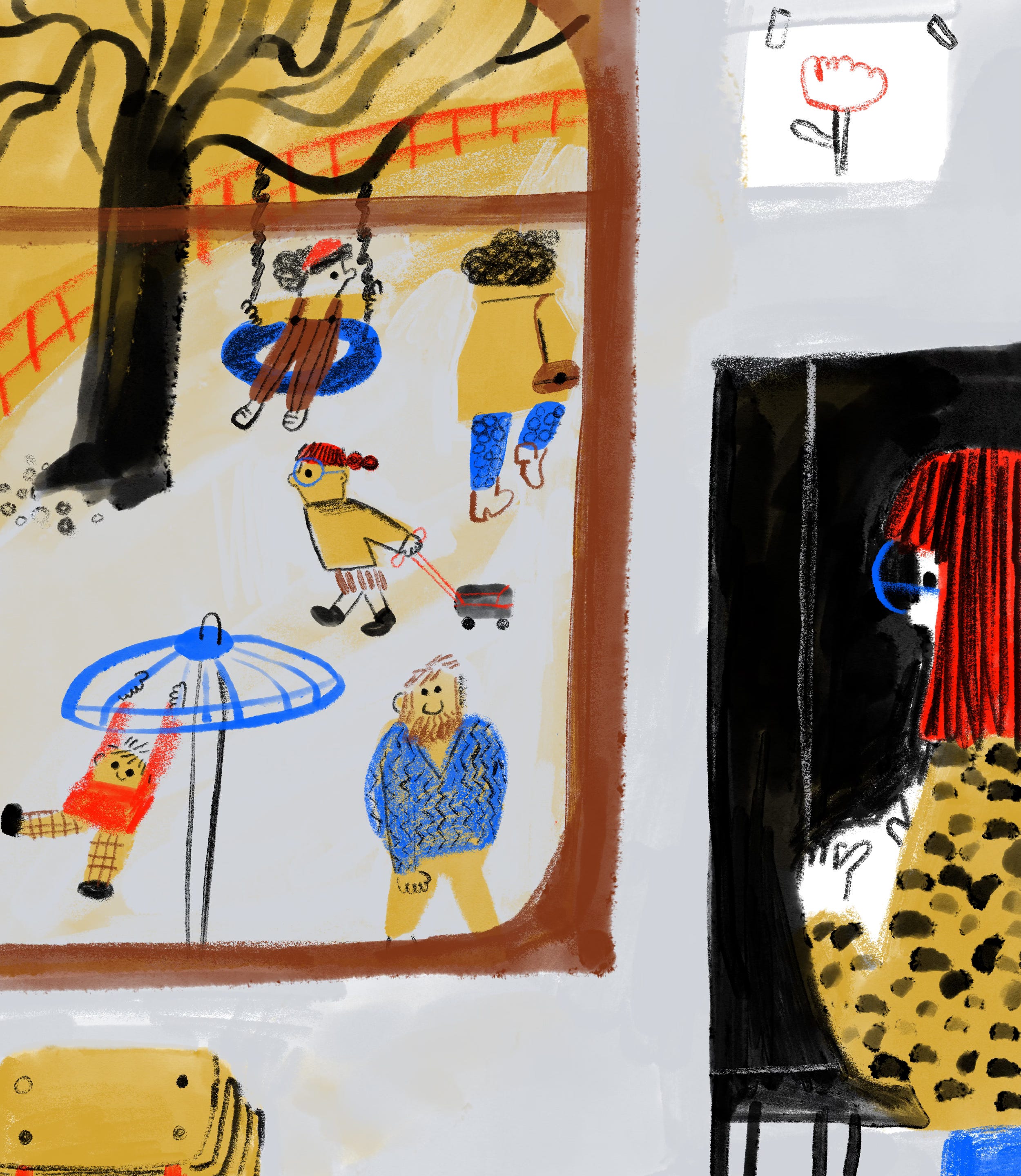
The magazine’s theme was democracy and (just between us) I found the texts disappointing. Not because the writing or the framing lack originality, but because they reveal the extent of our collective political illiteracy: conflating democracy with the right to vote. Both authors – and they are established, inquiring intellectuals – when asked to write a column on democracy, confined themselves to writing about elections. It is also a symptom of the West’s structural lack of political imagination.
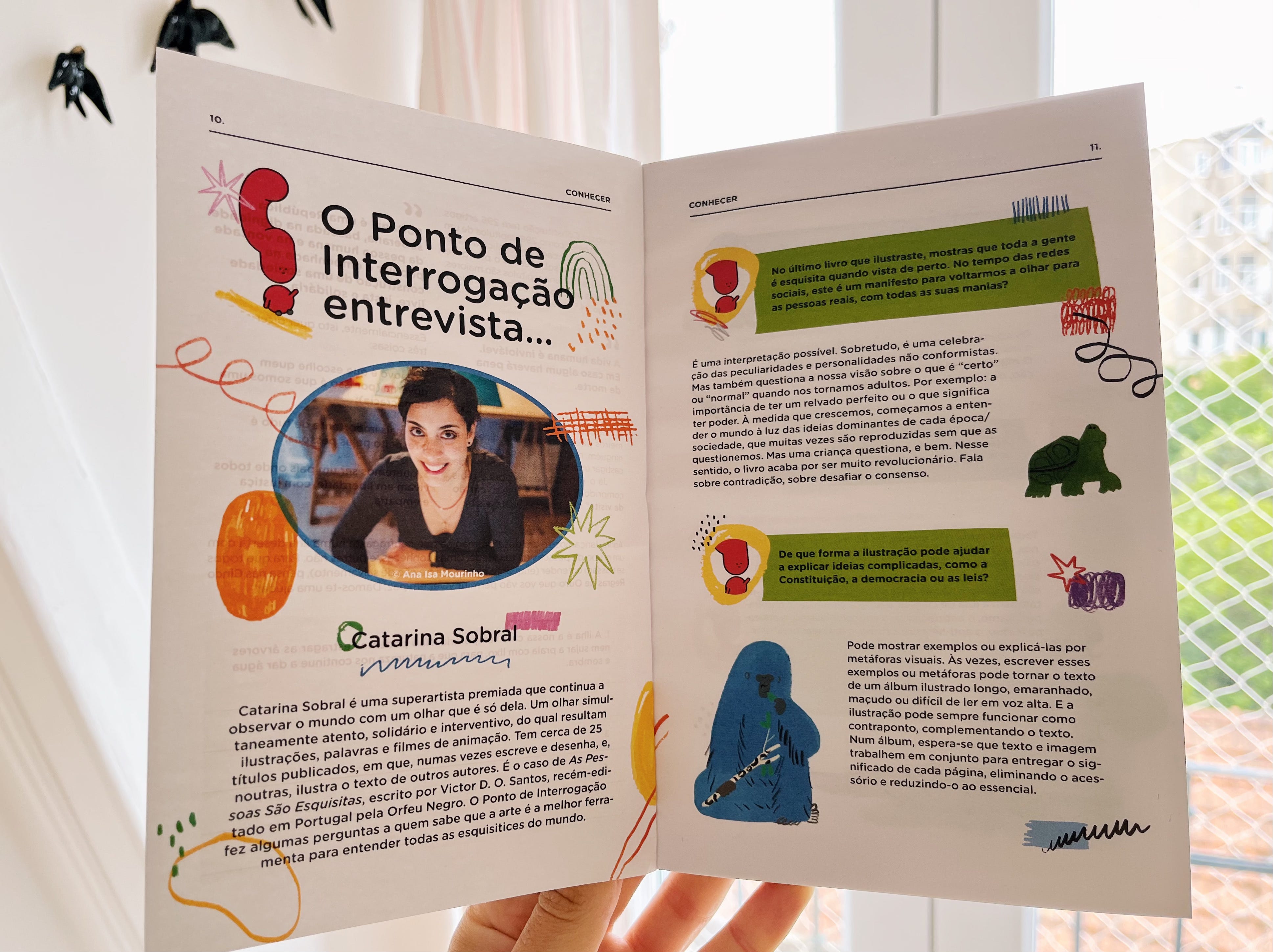
Now, whenever I’m interviewed, the questions often end up turning to politics. Which I really appreciate, don’t get me wrong. In the interview below, for Bertrand’s children’s magazine, I was asked my all-time favourite question (the interviewer, Carla Maia de Almeida, is also a writer, and that comes across in the sort of questions she asks): If you had to live inside one of your illustrations, which page of which book would you move to? But I was also asked about the causes I advocate and how a picture book can help explain complex concepts, such as democracy.
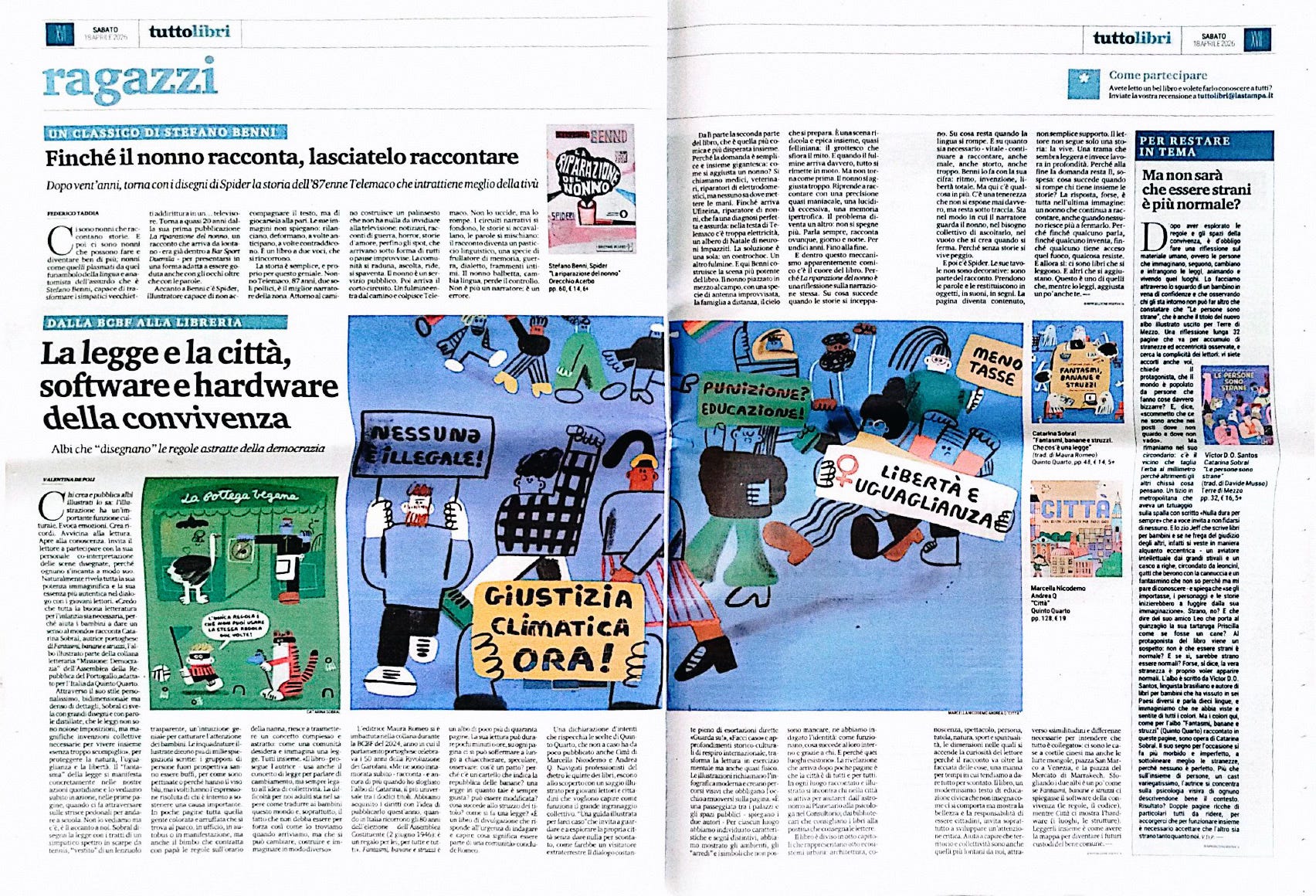
In another interview with the Italian newspaper La Stampa, regarding my book Fantasmi, Banane e Struzzi, recently published by Quinto Quarto, I was asked these three questions:
To what extent, and through what creative insights, does your book help children grasp the concept of community – or, better still, realise that they are part of a community?
Fantasmi, Banane e Struzzi is based on two ideas: 1) that the law is a fiction, and therefore must be imagined, and 2) that it is imagined collectively. And the concept of the collective is further unravelled in two ways: before a law is written, a community must want it and imagine it together; and, once it is written, it becomes a pact, an agreement, of an even larger community. Ultimately, the book uses the concept of law to talk about change, but always linked to the idea of the collective, and so brings children closer to that awareness.
Why are books like yours, picture books that ‘help us pay attention’, necessary, and why was it necessary for you to write and tell them?
I think all good children’s literature is necessary. It helps children make sense of the world. To explore this place that adults already understand (almost always) and where they have only just arrived. The difficulty lies in knowing how to translate this world to them (the difficulty is ours, not theirs; it is we who must rediscover the code). For me, it was important to write it precisely because I could tell them about this aspect of the world, which they are still discovering: that it doesn’t have to be exactly as we see it when we arrive, that it can be changed, built, imagined differently.
How does it make you feel to imagine your book in the hands of children and their carers (if you envisage them as your readers)?
A mixture of nervousness and pride, both stemming from the responsibility of communicating such important subjects to people who are so free. And to adults as well.
Curiously, both countries celebrate freedom on the same public holiday: 25 April. Freedom Day in Portugal and Liberation Day in Italy mark the end of dictatorships. Yet these questions in interviews arise not only because of the holiday, but also because anyone with half an interest in the current state of affairs understands the urgency of addressing these issues. In Lisbon, there was even a concerted attempt by the right-wing executive to hollow out the meaning of our revolution. Thousands of people (including myself) signed a petition against the erosion of its significance and filled the streets on 25 April. (By the way, if you were there, submit a photo of your poster or someone else’s poster to this project.)
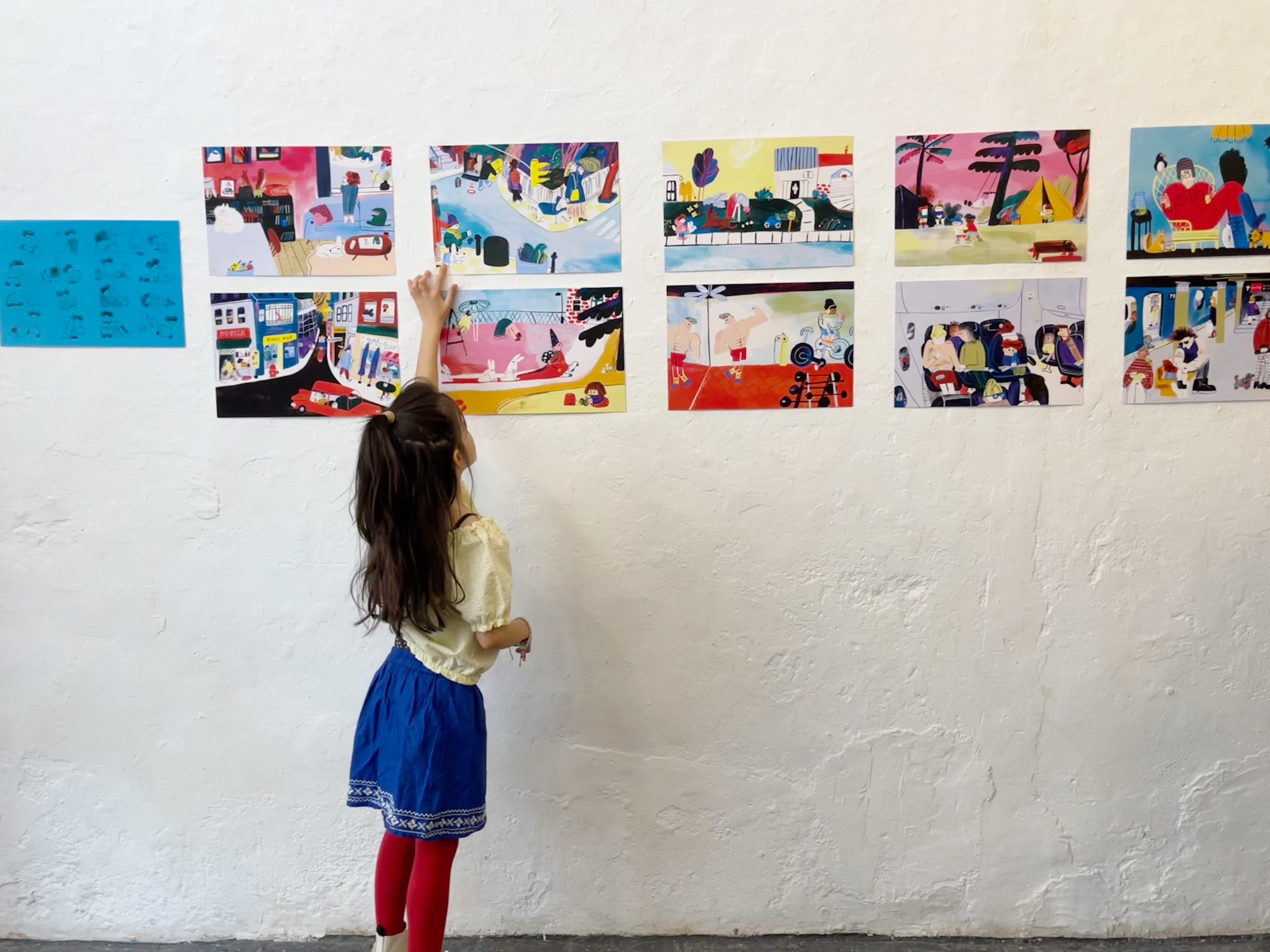
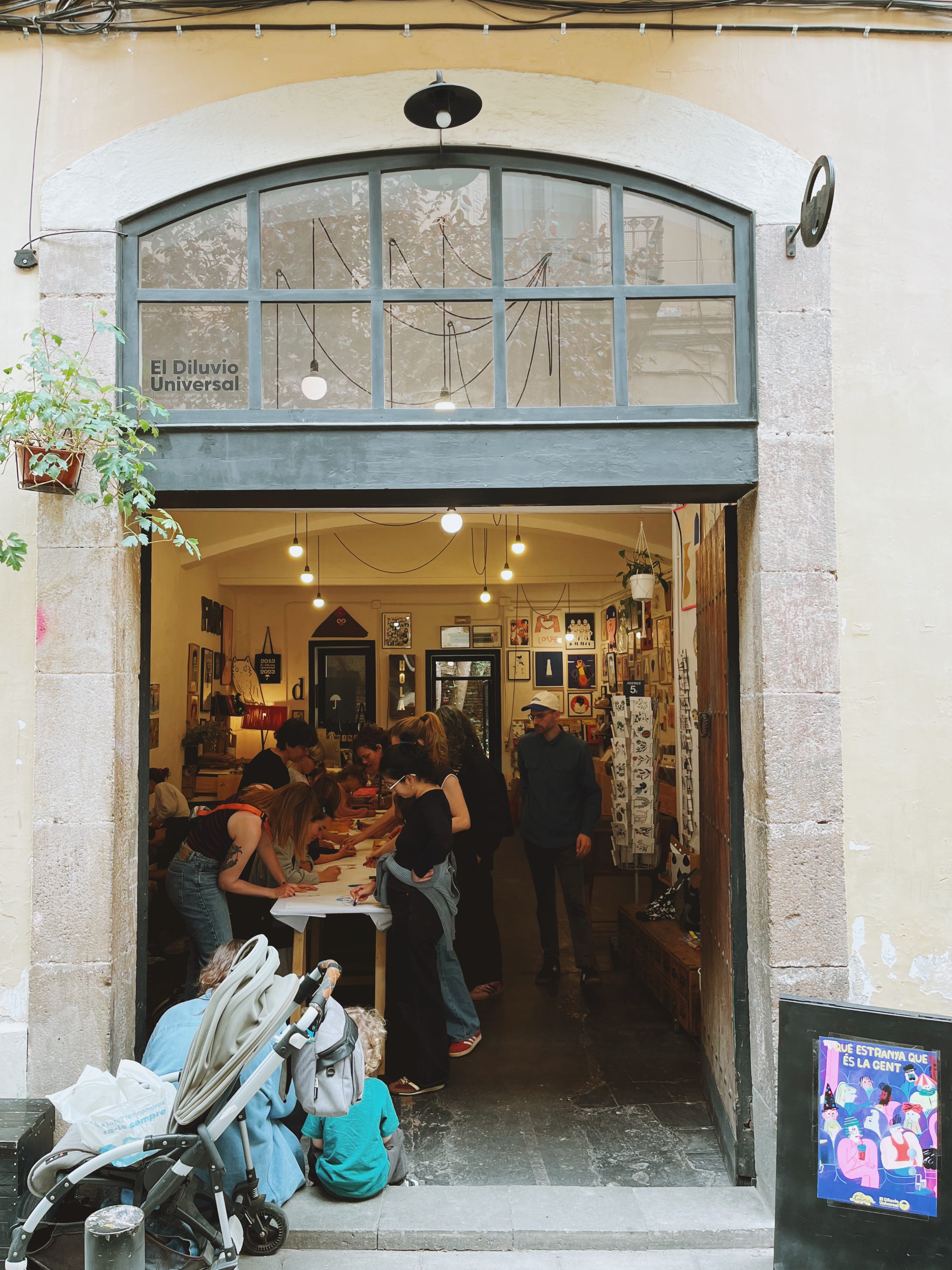
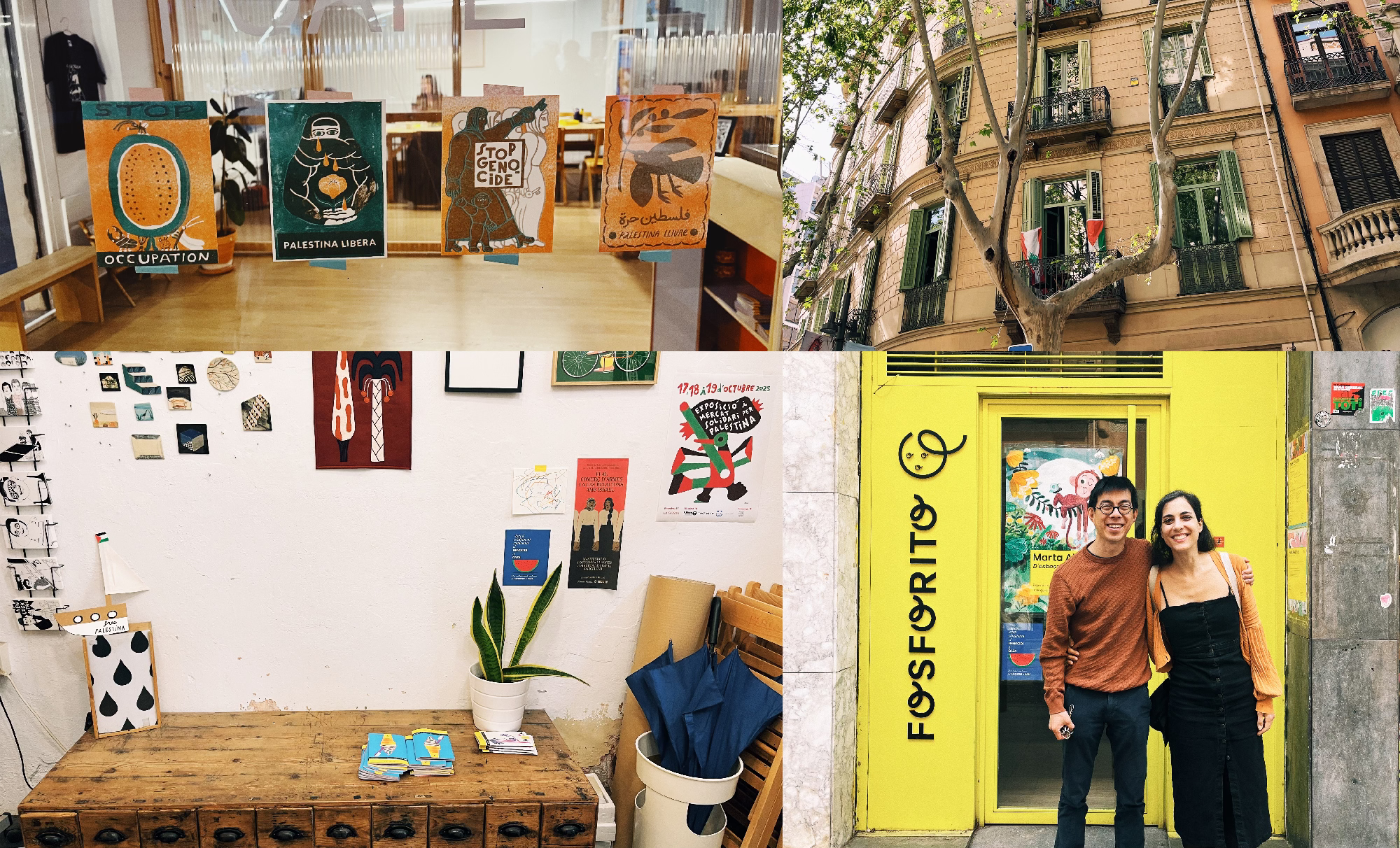
I saw many signs of community resistance in Barcelona, particularly in Gràcia. (Photos from my brief work trip below.) Housing unions, community gardens, welcoming public spaces with facilities for local residents to use (which were, in fact, widely used). It was very inspiring. We urgently need to expand our political imagination. As the saying attributed to the ancient Chinese philosopher Lao Tzu goes: ‘If you don’t change direction, you may end up where you are heading.’
In love and resolve,
C.
P.S. Last weekend, I did the funnest thing imaginable: I went to IndieLisboa Pool Cinema.
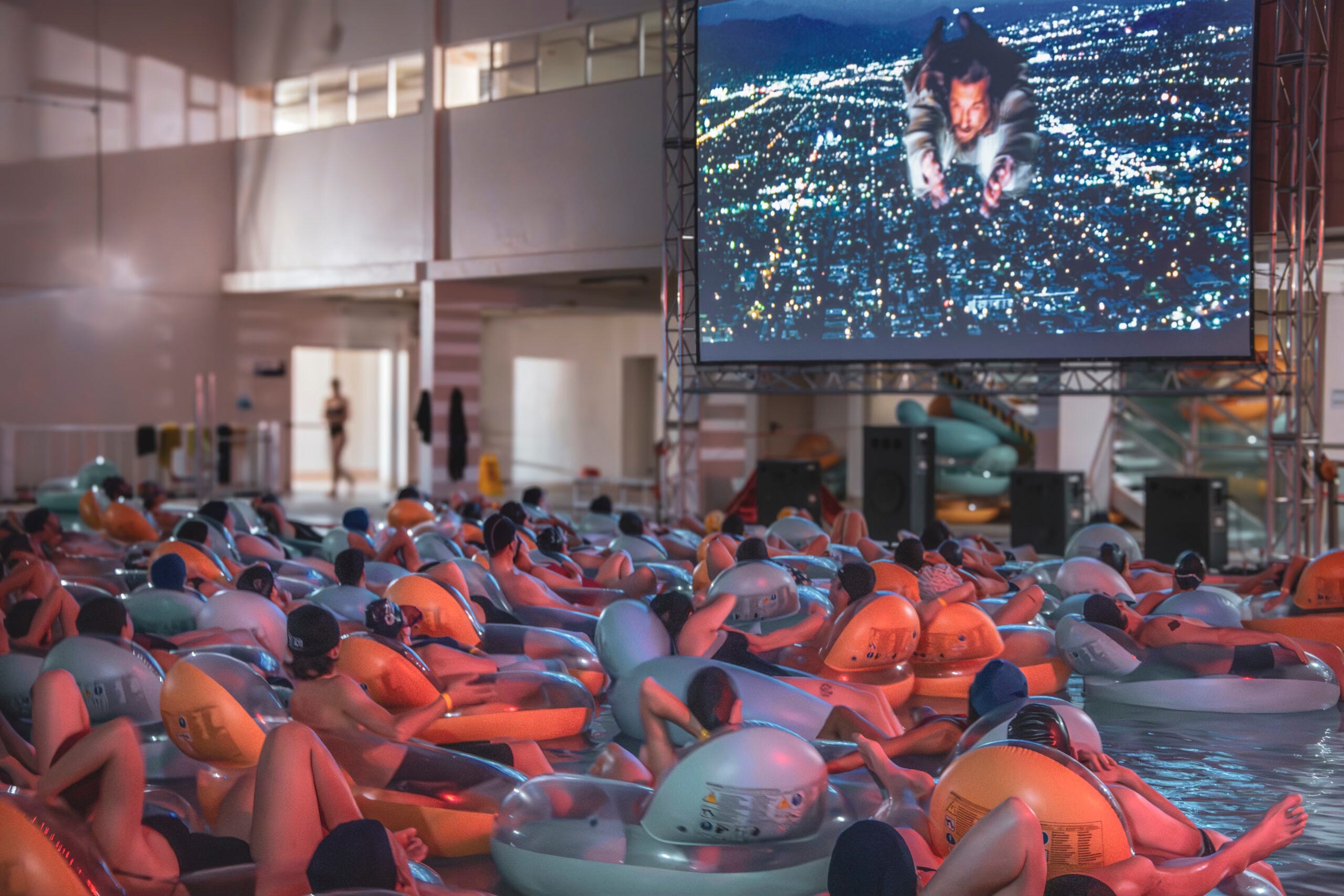
I watched the sexiest Jane Fonda of all time in the weirdest and most trippy cult sci-fi film ever (Barbarella), whilst floating in my swimsuit on an inflatable buoy in the Penha da França municipal swimming pool. The ushers were in the pool throughout the film, making sure all the viewers were turned and positioned so they could see the screen. Open-air cinema is nothing compared to this!
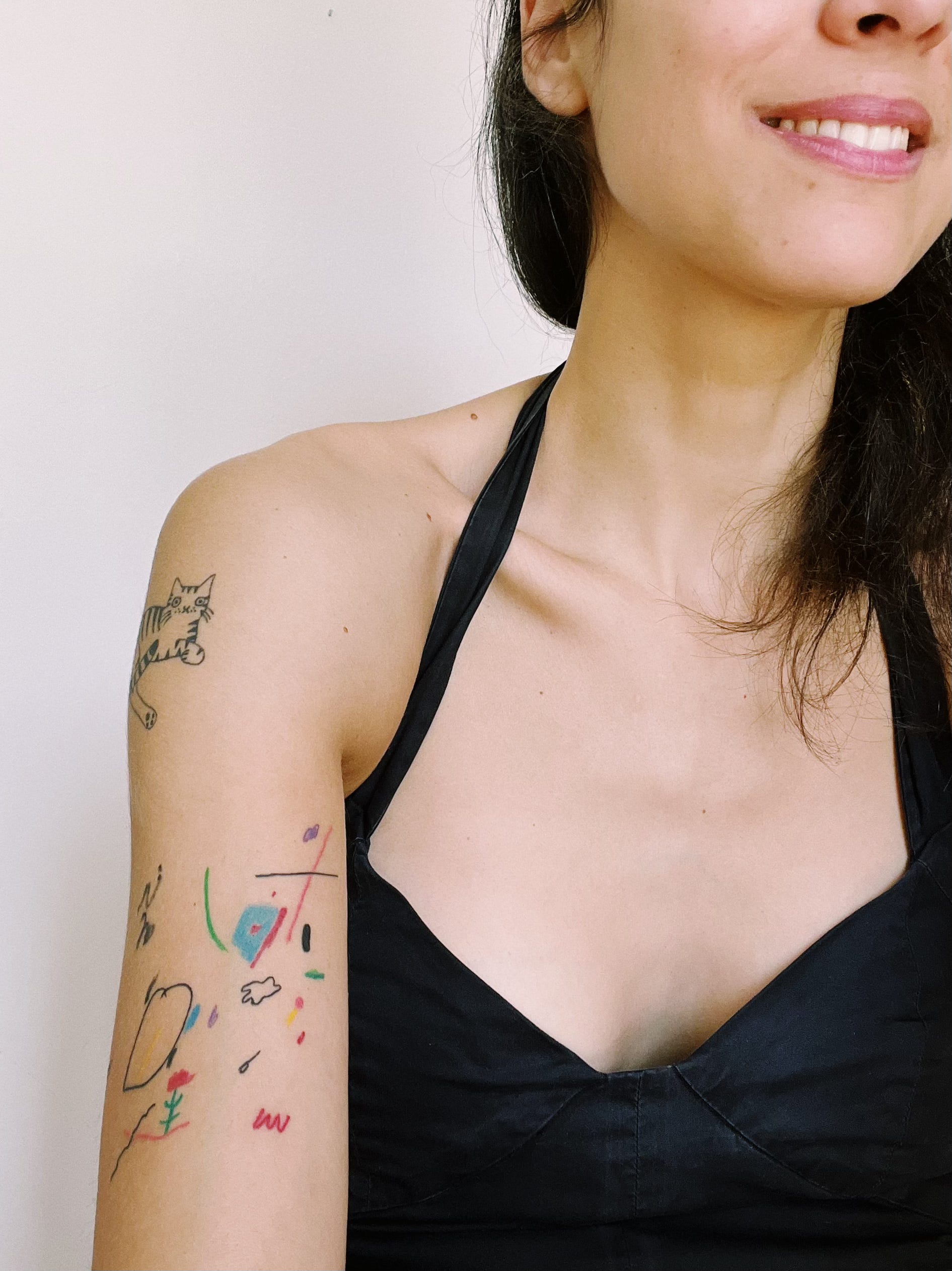
P.P.S. This is my new tattoo, by Espirro
Thank you for sharing your interview answers, Catarina. I love the idea behind “Fantasmi, Banane e Struzzi”, and the artworks look wonderful! Any chance for a French (or English) edition soon?